
Boosting willpower isn’t about “trying harder”—it’s about designing your environment and habits so that staying on track becomes the path of least resistance.
Here are 10 science-backed, simple ways to strengthen your self-control for weight loss in 2026.
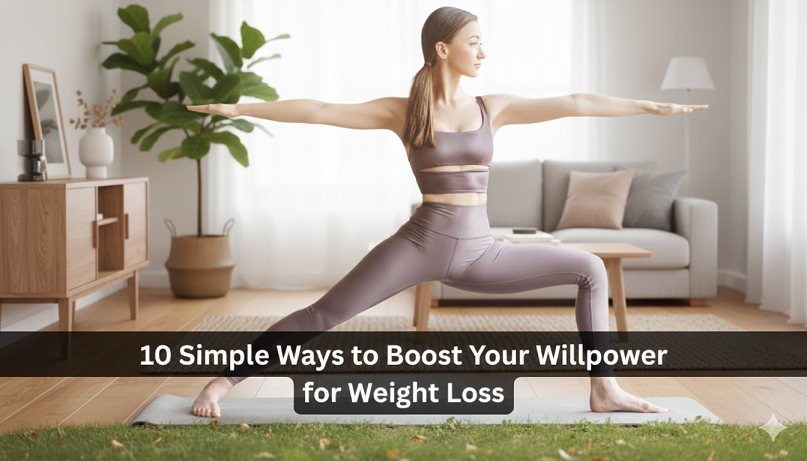
10 Simple Ways to Boost Your Willpower for Weight Loss
1. The “10-Minute Rule” for Cravings
When a craving hits, don’t tell yourself “no”—tell yourself “later.” Tell yourself you can have that treat after waiting 10 minutes. Often, the peak of the craving will pass, and your logical brain will take back control.
-
willpower for weight loss,boost self-control,weight loss mindset,how to stop cravings,habit formation,behavioral weight loss. -
psychology of weight loss,science of willpower,how to stay on track with diet,overcoming emotional eating,weight loss motivation 2026.
2. Prioritize 7+ Hours of Sleep
Willpower is a finite resource powered by the prefrontal cortex. When you are sleep-deprived, your brain struggles to regulate impulses, making you crave high-calorie, sugary foods. Sleep is literally “willpower fuel.”
3. Use the “Out of Sight, Out of Mind” Hack
Don’t rely on mental strength to resist cookies on the counter. Research shows that simply moving unhealthy snacks into an opaque container or a high cabinet reduces consumption significantly. Design your kitchen for success.
4. Never Shop or Prep While Hungry
The “Hungry Brain” makes impulsive decisions. Always eat a high-protein snack before grocery shopping or meal prepping. This keeps your blood sugar stable and your decision-making sharp.
5. Focus on “Identity” Rather Than “Goals”
Instead of saying, “I’m trying to lose weight,” say, “I’m the type of person who chooses healthy fuel.” Shifting your identity makes the choice feel like a reflection of who you are, rather than a chore you are forced to do.
6. Practice “Implementation Intentions” (If-Then Plans)
Plan for obstacles before they happen.
-
Example: “If my coworkers order pizza, then I will eat the salad I brought and enjoy one small slice.” This removes the “decision fatigue” in the moment.
7. Manage Your Stress Levels
High cortisol (the stress hormone) directly attacks willpower and increases abdominal fat storage. Use the 4-7-8 breathing technique or a quick 5-minute walk to lower stress before sitting down to eat.
8. Eat Protein First
Protein increases satiety hormones (like PYY and GLP-1). By eating your protein source first at every meal, you feel full faster, reducing the willpower needed to stop eating before you overindulge in carbs or fats.
-
willpower for weight loss,boost self-control,weight loss mindset,how to stop cravings,habit formation,behavioral weight loss. -
:
psychology of weight loss,science of willpower,how to stay on track with diet,overcoming emotional eating,weight loss motivation 2026.
9. Forgive Your Slip-Ups Immediately
The “What the Hell” effect happens when you eat one bad thing and decide the whole day is ruined. Self-compassion actually increases future willpower, while guilt drains it. If you slip up, just make the very next choice a healthy one.
10. Start with “Tiny Wins”
Don’t try to change 10 habits at once. Pick one—like drinking a glass of water before every meal. Successfully keeping a small promise to yourself builds the “willpower muscle” needed for bigger changes later.
📈 Willpower vs. Environment: A Quick Comparison
| Feature | Relying on Willpower | Relying on Environment |
| Effort | High (Exhausting) | Low (Automatic) |
| Sustainability | Short-term | Long-term |
| Success Rate | Depends on mood | Consistent |
| Main Tool | Mental discipline | Smart planning |
Here is a clean, scannable table summarizing the strategies. This layout is designed for high-quality blog posts or educational infographics.
⚡ Quick Overview of Willpower-Boosting Strategies
| Strategy | Action Step | How It Works |
| The 10-Minute Rule | Wait 10 mins before giving in to a craving. | Allows the “impulse wave” to pass. |
| Sleep Priority | Get 7–9 hours of quality rest. | Recharges the prefrontal cortex (the brain’s CEO). |
| Environment Design | Hide junk food; keep healthy snacks visible. | Reduces “decision fatigue” by removing triggers. |
| Identity Shifting | Say “I don’t eat that” vs. “I can’t eat that.” | Creates a mental boundary based on who you are. |
| Protein-First Rule | Eat your protein source at the start of the meal. | Signals fullness to the brain earlier. |
| If-Then Planning | Pre-decide your reaction to social pressure. | Automates decisions so you don’t have to think. |
| Stress Management | Use 4-7-8 breathing when feeling overwhelmed. | Lowers cortisol, which often triggers “stress eating.” |
| Micro-Wins | Master one tiny habit (like drinking water) first. | Builds confidence and “willpower stamina.” |
| Self-Compassion | Forgive a slip-up and move on immediately. | Prevents the “What the Hell” binge effect. |
| Stable Glucose | Never grocery shop while hungry. | Prevents the “Hungry Brain” from making poor choices. |
💡 How to Use This Table in Your Banner
If you are designing a visual with this information, focus on these three elements:
-
Iconography: Use small icons (a clock for the 10-minute rule, a bed for sleep) to make it scannable.
-
Color Coding: Use soft greens for “Actions” and calm blues for “Benefits” to keep the aesthetic professional.
-
Typography: Use a bold Sans-Serif font for the Strategy column and a lighter font for the details.
-
willpower for weight loss,boost self-control,weight loss mindset,how to stop cravings,habit formation,behavioral weight loss. -
psychology of weight loss,science of willpower,how to stay on track with diet,overcoming emotional eating,weight loss motivation 2026.