
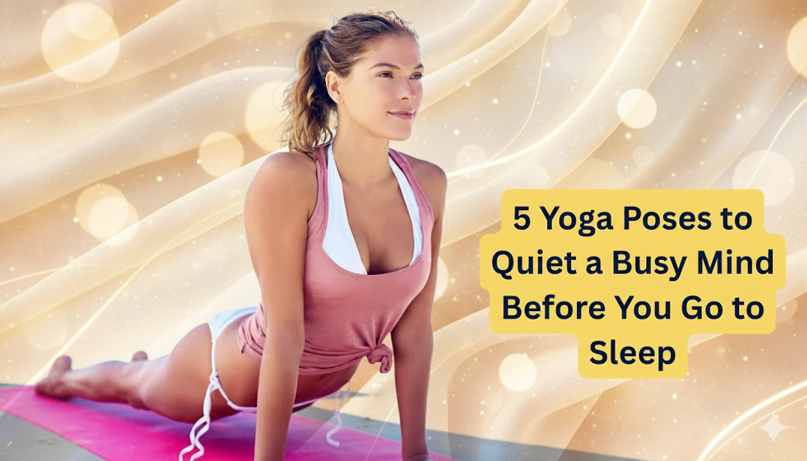
To quiet a racing mind before sleep, it is best to focus on restorative poses that activate the parasympathetic nervous system (the “rest and digest” mode). These poses move the spine gently, open the hips where we often hold stress, and use gravity to calm the heart rate.
Here are 5 yoga poses designed to help you transition from “alert” to “rest.”
5 Yoga Poses to Quiet a Busy Mind Before You Go to Sleep
1. Child’s Pose (Balasana)
This is the ultimate “reset” button. By folding forward and resting your forehead on the ground, you send a signal to your nervous system that you are safe and grounded.
-
How to do it: Kneel on the floor, bring your big toes together, and sit on your heels. Separate your knees as wide as your hips. Fold forward, resting your chest on your thighs and your forehead on the mat.
-
Why it works: It gently stretches the lower back and hips while providing a sense of cocoon-like security.
2. Legs Up the Wall (Viparita Karani)
Considered one of the most powerful poses for sleep, this gentle inversion reverses blood flow and reduces end-of-day swelling in the legs.
-
How to do it: Sit sideways as close to a wall as possible. Lie back and swing your legs up the wall so your body forms an “L” shape. Rest your arms by your sides with palms facing up.
-
Why it works: It triggers a rapid relaxation response and can even help soothe mild headaches caused by stress.
3. Reclining Bound Angle (Supta Baddha Konasana)
This pose focuses on opening the hips and chest, allowing for deeper, more nourishing breaths.
-
How to do it: Lie flat on your back. Bring the soles of your feet together and let your knees fall open to the sides. Place your hands on your belly or stretch them out in a “T” shape.
-
Why it works: It encourages “belly breathing,” which directly counteracts the shallow, rapid breathing associated with anxiety.
4. Supine Spinal Twist (Supta Matsyendrasana)
Twists are excellent for “wringing out” the physical tension of the day from your spine and digestive system.
-
How to do it: Lying on your back, hug your knees to your chest. Slowly drop both knees to the left side while keeping your right shoulder pressed into the floor. Look toward your right hand. Repeat on the other side.
-
Why it works: It releases tightness in the mid-back and encourages a deep, calming exhale.
5. Supported Corpse Pose (Savasana)
Unlike the standard Savasana, using props before bed ensures your muscles can fully surrender.
-
How to do it: Lie flat on your back. Place a pillow or rolled-up blanket under your knees to release lower back pressure. Close your eyes and focus on the weight of your body sinking into the mattress.
-
Why it works: It allows the mind to absorb the benefits of the previous stretches and prepares you for the final transition into sleep.
| Yoga Pose | Primary Benefit | Recommended Duration | Focus Area |
| Child’s Pose | Grounds the mind & releases lower back | 1–3 Minutes | Forehead, Hips |
| Legs Up the Wall | Reverses blood flow & slows heart rate | 5–10 Minutes | Legs, Nervous System |
| Reclining Butterfly | Opens hips & encourages deep breathing | 3–5 Minutes | Hips, Inner Thighs |
| Supine Spinal Twist | Relieves spinal tension & aids digestion | 1–2 Min per side | Spine, Abdomen |
| Corpse Pose | Total physical and mental surrender | 5–10 Minutes | Full Body Scan |